How Much Does It Cost to Build a SaaS Product in 2026? Factors That Really Matter
Building a SaaS product is one of the smartest ways to create a scalable business, but what really determines the investment required? In this guide, we'll explore the key factors that influence SaaS development, common mistakes founders make, and how to build a successful product without wasting time or resources.
How Much Does It Cost to Build a SaaS Product in 2026?
Software as a Service (SaaS) has become one of the most successful business models in the digital economy. From CRM platforms and HR software to AI-powered applications and project management tools, businesses around the world continue to invest in SaaS solutions that improve efficiency and generate recurring revenue.
One of the first questions every founder asks is:
"How much does it cost to build a SaaS product?"
While it's a valid question, the truth is that there is no fixed answer.
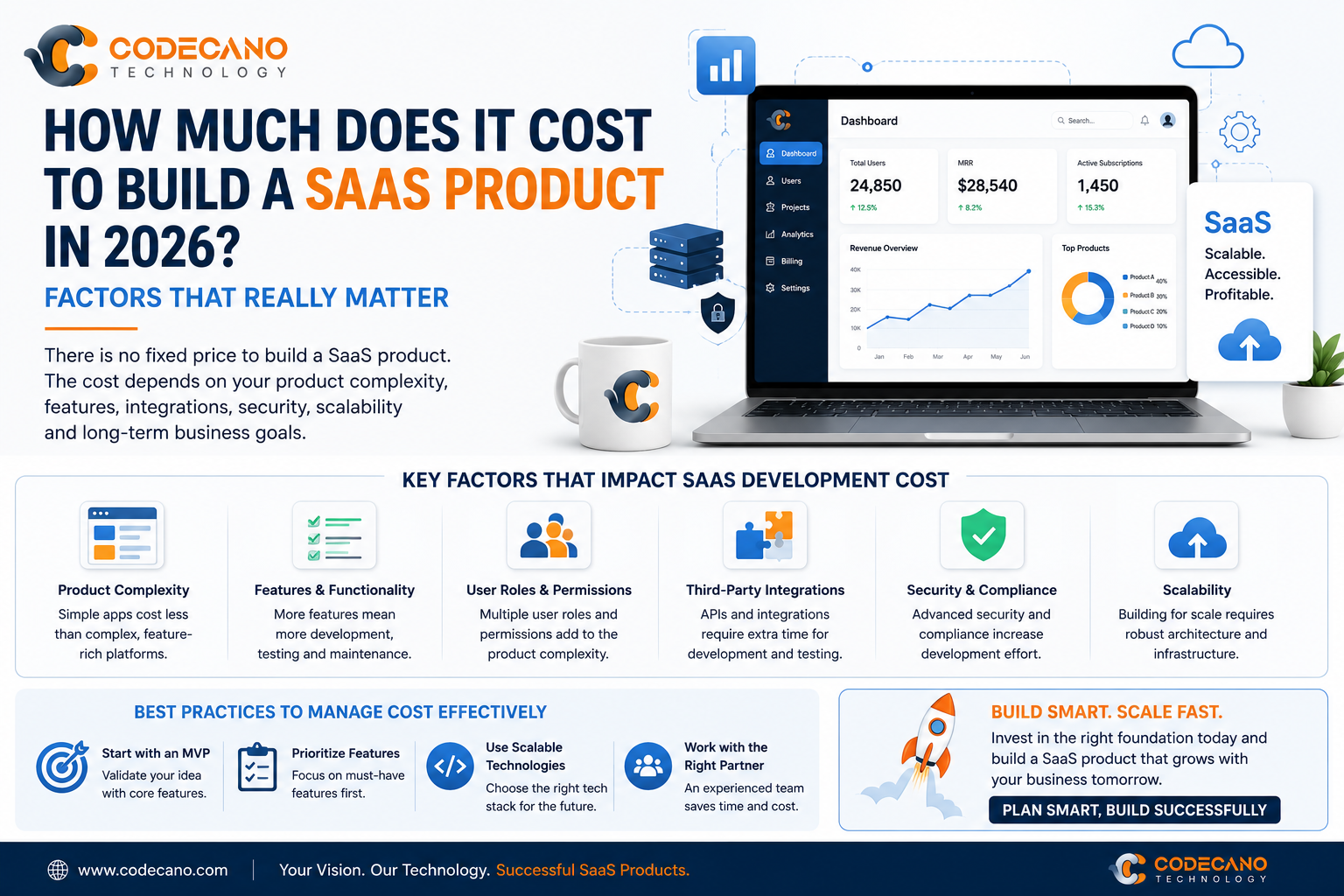
Every SaaS product is unique. The investment depends on your business goals, product complexity, features, security requirements, integrations, and long-term vision.
Instead of focusing only on cost, founders should focus on building a product that delivers real value to customers and can scale as the business grows.
What Is a SaaS Product?
A SaaS (Software as a Service) product is a cloud-based application that users access through a web browser or mobile app without installing software on their computers.
Popular examples include:
- Customer Relationship Management (CRM)
- Project Management Software
- HR Management Systems
- Accounting Platforms
- Learning Management Systems
- Inventory Management Software
- Marketing Automation Platforms
Unlike traditional software, SaaS products are continuously updated, scalable, and accessible from anywhere.
What Actually Impacts SaaS Development?
Every SaaS product is different, and several factors influence the overall development effort.
Product Complexity
The complexity of your software plays the biggest role.
For example:
- A simple appointment booking platform requires fewer resources than an AI-powered ERP system.
- A project management tool is very different from a multi-vendor marketplace.
- A CRM with basic customer management is much simpler than a platform with automation, analytics, and AI recommendations.
The more business logic your software requires, the more planning and development are involved.
Features and Functionality
Every feature increases development effort.
Common SaaS features include:
- User Registration
- Authentication
- Subscription Management
- Dashboards
- Notifications
- Reports
- Search & Filters
- File Uploads
- Team Collaboration
- Workflow Automation
- AI Assistance
The goal isn't to build every feature at once.
The goal is to build the features your customers actually need.
User Roles and Permissions
Many SaaS platforms support different types of users.
Examples include:
- Super Admin
- Company Admin
- Managers
- Employees
- Vendors
- Customers
Each role has different permissions, dashboards, and workflows, adding to the product's complexity.
Third-Party Integrations
Modern SaaS products often connect with external services.
Examples include:
- Payment Gateways
- Email Providers
- Google Workspace
- Slack
- Zoom
- CRM Systems
- Accounting Software
- Cloud Storage
- Calendar Services
Every integration requires planning, testing, and long-term maintenance.
Security Requirements
Security should never be treated as an afterthought.
Depending on your industry, your SaaS product may require:
- Multi-Factor Authentication (MFA)
- Role-Based Access Control
- Data Encryption
- Audit Logs
- Secure APIs
- Backup & Disaster Recovery
- Compliance Standards
Strong security builds customer trust and protects sensitive business data.
Scalability
A SaaS product should be designed to grow.
Your application should be able to handle:
- More users
- Larger databases
- Increased traffic
- New features
- Additional integrations
- Global expansion
Planning scalability from the beginning prevents expensive architectural changes later.
Why Start with an MVP?
One of the biggest mistakes startup founders make is trying to launch a complete product with every feature they can imagine.
Instead, build an MVP (Minimum Viable Product).
An MVP focuses only on the core problem your product solves.
Benefits include:
- Faster launch
- Earlier customer feedback
- Reduced business risk
- Easier product validation
- Better use of development resources
Once customers begin using your product, you can continue improving it based on real-world feedback.
Common Mistakes That Increase Development Effort
Building Too Many Features
Adding unnecessary functionality before launch delays your product and makes it harder to maintain.
Focus on solving one problem exceptionally well.
Ignoring User Experience
Even powerful software fails if it's difficult to use.
Investing in a clean and intuitive user experience improves customer satisfaction and adoption.
Choosing the Wrong Technology Stack
The technology behind your product affects scalability, performance, and future maintenance.
Modern technologies help businesses launch faster while supporting long-term growth.
Skipping Product Discovery
Many startups begin coding immediately without clearly defining:
- Business goals
- User journey
- Feature priorities
- Product roadmap
Proper planning significantly reduces development risks.
What Makes a Successful SaaS Product?
The most successful SaaS companies don't succeed because they have the most features.
They succeed because they solve real business problems.
Successful SaaS products typically offer:
- A simple and intuitive user experience
- Reliable performance
- Strong security
- Scalability
- Continuous product improvements
- Excellent customer support
- Automation that saves users time
Customers stay loyal to software that consistently delivers value.
The Importance of Choosing the Right Development Partner
Building a SaaS product requires much more than writing code.
A professional development partner helps you:
- Validate your idea
- Prioritize essential features
- Design scalable architecture
- Build secure applications
- Improve user experience
- Launch faster
- Support future growth
Choosing an experienced team early can help avoid unnecessary delays and technical debt.
Why Codecano Technology?
At Codecano Technology, we help startups and businesses turn ideas into scalable SaaS products.
Our expertise includes:
- Product Discovery
- MVP Development
- UI/UX Design
- SaaS Architecture
- Web Application Development
- Mobile App Development
- API Development
- Cloud Deployment
- AI Integration
- Long-Term Maintenance
Whether you're building a startup MVP or a large-scale business platform, we focus on creating secure, scalable, and future-ready software that grows with your business.
Final Thoughts
When founders ask,
"How much does it cost to build a SaaS product?"
the better question is:
"How can I build the right SaaS product?"
The success of a SaaS business depends less on the initial investment and more on solving a real customer problem, launching efficiently, and continuously improving based on user feedback.
Start with a focused MVP, validate your idea, and scale strategically as your customer base grows.
With the right planning and the right technology partner, your SaaS product can become a scalable business that delivers long-term value to both your customers and your company.
Frequently Asked Questions (FAQs)
1. What is the first step in building a SaaS product?
Start with product discovery. Define the problem you're solving, identify your target audience, and prioritize the core features for your MVP.
2. Should I build an MVP before a full SaaS product?
Yes. An MVP helps validate your idea, collect customer feedback, and reduce development risks before investing in advanced features.
3. What technologies are commonly used for SaaS development?
Popular technologies include React, Next.js, Node.js, Laravel, PostgreSQL, MongoDB, Docker, Kubernetes, and cloud platforms like AWS, Azure, or Google Cloud.
4. How long does it take to develop a SaaS application?
The timeline depends on the product's complexity, feature set, integrations, and business requirements. Starting with an MVP allows businesses to launch much faster and iterate based on user feedback.
5. Can an existing business transform its software into a SaaS platform?
Yes. Many businesses modernize legacy systems by converting them into cloud-based SaaS solutions that support subscriptions, multi-tenancy, and remote access.